PREMIO AROMATA
LiberoStile Ass. Culturale
Sede Legale: Largo Trasibulo di Stiria 18, Roma 00124
CF: 96576580581
Registrazione n. 2000 Agenzia delle Entrate UT Roma 7-Acilia
PREMIO AROMATA
L'INVISIBILE TRA LE RIGHE
8-10 ottobre 2026
PALAZZO VELLI
ROMA
OPEN CALL scadenza 31 agosto

BANDO E REGOLAMENTO CONCORSO
“L’INVISIBILE TRA LE RIGHE”
CONTEST ANNOUNCEMENT AND RULES
“THE INVISIBLE BETWEEN THE LINES”
Il “Premio Aromata 2026 "Profumo: codice espressivo", nato nel 2024 e promosso da LiberoStile Associazione Culturale, è un concorso internazionale e un evento espositivo dedicato alla profumeria artistica. La terza edizione si svolgerà dall’8 al 10 ottobre 2026 presso Palazzo Velli, residenza medievale nel cuore del rione Trastevere. L’evento ha il duplice intento di valorizzare il patrimonio artistico materiale e immateriale dei maestri profumieri e al contempo diffondere la cultura del profumo di nicchia non solo al pubblico specializzato, ma anche e soprattutto ai non addetti ai lavori, ai quali si propone di far conoscere e apprezzare l'affascinante mondo ricco di storia e competenze della profumeria artistica.
L'iniziativa nasce per costituire un evento romano del settore, dove la creatività e la sensibilità dei maestri profumieri venga valorizzata e apprezzata al pari di quella di un celebre compositore, di un grande pittore o di un raffinato gioielliere.
The “Premio Aromata 2026 "Perfume: expressive code", born in 2024 and promoted by LiberoStile Associazione Culturale, is an international competition and an exhibition event dedicated to artistic perfumery. The third edition will take place from 8 to 10 October 2026 at Palazzo Velli, a medieval residence in the heart of the Trastevere district.
The event has the dual aim of enhancing the material and immaterial artistic heritage of master perfumers and at the same time spreading the culture of niche perfume not only to the specialized public, but also and above all to non-experts, to whom it aims to introduce and appreciate the fascinating world rich in history and skills of artistic perfumery.
The initiative was born to create a Roman event in the industry where the creativity and sensitivity of master perfumers is enhanced and appreciated on a par with that of a famous composer, a great painter or a refined jeweler.
Con il termine Aromata i Romani indicavano le spezie i cui aromi venivano utilizzati per realizzare oli e unguenti profumati come il Nardinum composto tra i tanti ingredienti da amomo, mirra, olio di oliva acerbo, ma soprattutto da nardo, i cui magazzini, gli Horrea piperataria al Foro romano sono stati recentemente restaurati e aperti al pubblico. All'epoca, i profumieri erano riuniti nella corporazione Collegium aromatarium e le loro botteghe erano raggruppate nei pressi del Velabro, in particolare nel Vicus thuriarius e nel Vicus unguentarius. I Romani profumavano tutto: muri, mosaici, statue, abiti, vini e pietanze, palcoscenici dei teatri; secondo Svetonio, nella Domus Aurea "Il soffitto delle sale da pranzo era costituito da tavolette d'avorio mobili, attraverso delle aperture dalle quali sgorgavano fiori e profumi”.
Non è quindi un caso che Roma ci sia apparsa subito come il luogo ideale per ospitare il concorso. Il potere evocativo di un profumo è eterno, come questa città e la sua consolidata vocazione artistica la rende il luogo ideale per promuovere la cultura della profumeria di nicchia.
With the term Aromata the Romans indicated the spices whose aromas were used to make perfumed oils and ointments such as Nardinum composed, among the many ingredients, of amomum, myrrh, unripe olive oil, but above all of nard, whose warehouses, the Horrea piperataria in the Roman Forum, have recently been restored and opened to the public. At the time, the perfumers were united in the corporation Collegium aromatarium and their workshops were grouped near the Velabrum, in particular in the Vicus thuriarius and in the Vicus unguentarius. The Romans perfumed everything: walls, mosaics, statues, clothes, wines and food, theater stages; according to Suetonius, in the Domus Aurea
"The ceiling of the dining rooms was made of movable ivory tablets, through openings
from which flowers and perfumes flowed”.
It is therefore no coincidence that Rome immediately appeared to us as the ideal place to host the competition. The evocative power of a perfume is eternal, as this city and its consolidated artistic vocation make it the ideal place to promote the culture of niche perfumery.
TEMA
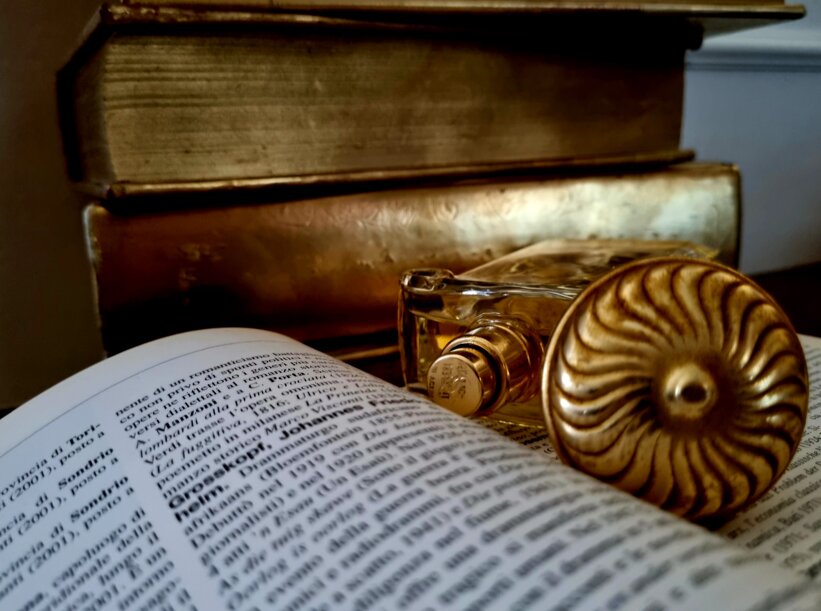
Anche per la terza edizione il tema “L’invisibile tra le righe” mette in luce il legame tra le due forme di espressione: scrittura e profumeria, tra le scripta manent e la potenza narrativa, seppur evanescente, di una fragranza. Sono molti i libri nella produzione letteraria mondiale le cui trame ruotano attorno ai profumi.
Autori di ogni epoca e luogo partendo dalle Nuvole di Aristotele, in cui il contadino si inebria del profumo di fichi e mosto nella sera delle sue nozze ad Ovidio precettore della tecnica amorosa, che chiude il secondo libro dell’Ars amandi con l’esaltazione di circostanze e luoghi in cui si fondono i profumi degli unguenti e dei fiori. Ad Oriente ecco La storia di Genji, di Murasaki Shikibu che evidenzia il grande valore attribuito al profumo dalla cultura nipponica nell’epoca Heian. Tornando in Europa uno degli autori che ha più legato il profumo alle sue parole è William Shakespeare. Egli parla di fiori ed essenze in quasi ogni suo scritto: il rosmarino nell’Amleto, le viole del pensiero in Romeo e Giulietta, il timo di Sogno di una notte di mezza estate. Fino ad arrivare all’’900 italiano con Giorgio Caproni la cui poesia è spesso una ricerca di luoghi perduti attraverso l’olfatto come in “Questo odore marino” per giungere al romanzo contemporaneo Venezia millefiori, che segue il viaggio dell’autrice Ryoko Sekiguchi attraverso i profumi nascosti tra le calli e le isole veneziane intrecciando testimonianze d’archivio, frammenti d’erbario e visioni poetiche.
Le fonti di ispirazione possono essere quindi le più disparate.
Non solo il profumo in letteratura, ma anche il processo inverso: la letteratura che diventa fragranza. Ci interessa la possibilità che l'invisibile - raccontato o immaginato - che alberga tra le righe di un testo, prenda vita grazie alla creatività del maitre parfumeur.
THEME
The theme “The invisible between the lines” highlights the link between the two forms of expression: writing and perfumery, between the scripta manent and the narrative power, albeit evanescent, of a fragrance.
There are many books in the world's literary production whose plots revolve around perfumes.
Authors from every era and place, from Aristotle's Clouds, in which the peasant is intoxicated by the scent of figs and must on the evening of his wedding, to Ovid, the tutor of lovemaking, who closes the second book of the Ars amandi with the exaltation of circumstances and places where the scents of ointments and flowers blend. From the East, there's Murasaki Shikibu's The Tale of Genji, which highlights the great value placed on perfume by Japanese culture in the Heian period. Returning to Europe, one of the authors who most closely linked perfume to his words is William Shakespeare. He mentions flowers and essences in almost every one of his writings: rosemary in Hamlet, pansies in Romeo and Juliet, thyme in A Midsummer Night's Dream. Up to the 20th century Italian period with Giorgio Caproni, whose poetry is often a search for lost places through smell, as in “Questo odore marino” and finally to the contemporary novel Venice a Thousand Flowers, which follows the author Ryoko Sekiguchi's journey through the scents hidden among the Venetian streets and islands, intertwining archival testimonies, herbarium fragments, and poetic visions.
Not only perfume in literature, but also the reverse process: literature that becomes fragrance. We are interested in the possibility that the invisible - told or imagined - that dwells between the lines of a literary extract, comes to life thanks to the creativity of the maitre parfumeur.
Ai partecipanti viene quindi chiesto di presentare una propria creazione (non necessariamente recente) ispirata ai profumi descritti nel testo letterario scelto, ovvero una fragranza che incarni l'emozione suscitata dal fascino di un personaggio di un racconto, dall'atmosfera degli ambienti di un romanzo, dal testo di una poesia, dal segno lasciato nel cuore e dall'intimo cambiamento che la lettura di quelle righe ha reso possibile. I maestri profumieri tradurranno in note olfattive le sensazioni e gli stati d'animo suscitati dalla lettura di quelle parole. Le loro scelte letterarie costituiranno le tappe di un'esperienza sensoriale: un viaggio olfattivo, un giro del mondo, un viaggio nel tempo.
Participants are then asked to present their own creation (not necessarily recent) inspired by the perfumes described in the chosen literary text, or a fragrance that embodies the emotion aroused by the charm of a character in a story, by the atmosphere of the settings in a novel, by the text of a poem, by the mark left on the heart and by the intimate change that reading those lines has made possible. The master perfumers will translate the sensations and states of mind aroused by reading those words into olfactory notes. Their literary choices will constitute the stages of a sensory experience: an olfactory journey, a tour of the world, a journey through time.